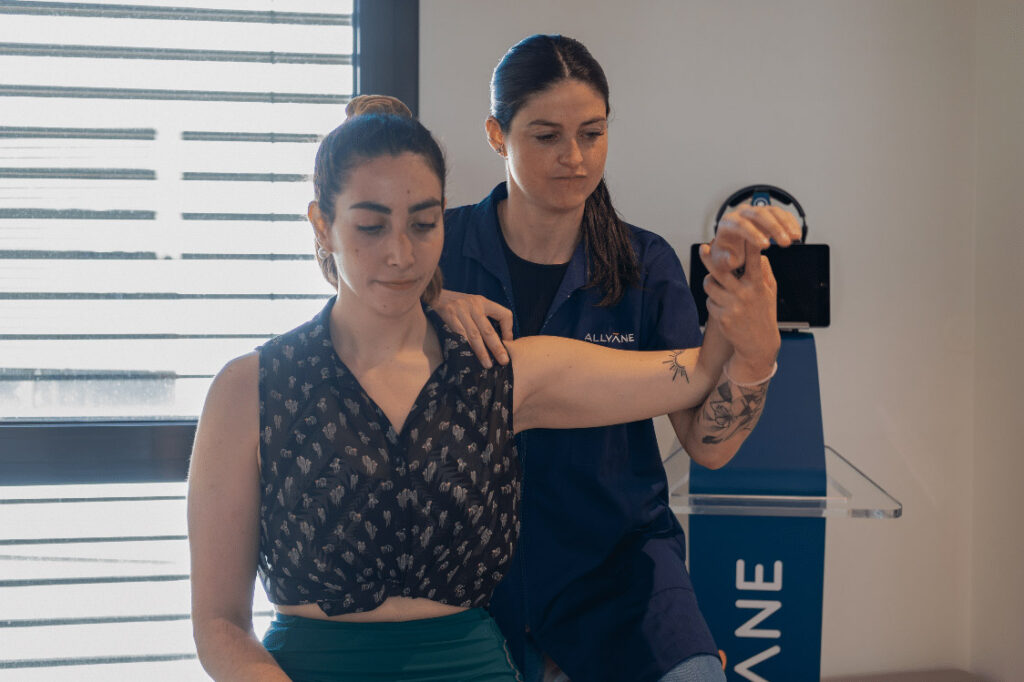
A fall onto the shoulder can be particularly alarming and, at times, quite painful. However, pain and the inability to lift your arm are signs that should not be ignored. These symptoms can be related to various injuries, ranging from a simple bruise to a more serious condition, such as a shoulder dislocation or a rotator cuff tear. So, what are the first steps to take after a fall? What treatment should you prioritize to minimize the damage? And most importantly, when should you see a healthcare professional to discuss shoulder rehabilitation? That’s what we’ll explore in the rest of this article.
Understanding the Injury: Why Can’t I Lift My Arm?
The shoulder is one of the most complex joints in the human body. It relies on the interaction of several anatomical structures: muscles, tendons, ligaments, and bones. When an injury occurs, these structures can be damaged, leading to pain and a loss of mobility—sometimes complete. Loss of mobility in the arm following a fall is often a sign of damage to the tissues involved in stabilizing and moving the shoulder. Depending on the severity of the injury, this can range from a simple muscle contusion to a tendon tear or a complete dislocation.
First Steps to Take After a Fall on the Shoulder
When a fall onto the shoulder causes acute pain and makes it impossible to lift the arm, it is very important to take the right steps immediately after the injury. In fact, prompt and appropriate care helps limit complications, reduce inflammation, and optimize the recovery process.
1. Immobilize the shoulder to prevent the injury from getting worse
One of the first steps to take after a shoulder injury is to stop all movement immediately. If the pain is severe and you are unable to lift your arm, keep your shoulder in a resting position to avoid aggravating the injury.
| How to properly immobilize your shoulder: Do not try to move your shoulder beyond what is tolerable in terms of pain.Hold your arm close to your body with your elbow slightly bent, and keep your forearm pressed against your abdomen. Use a support (such as a sling or scarf) to make a simple triangular bandage to support your arm and reduce strain on your joint.Avoid sudden movements: If your arm is hanging abnormally or if you notice any visible deformity, do not under any circumstances attempt to pop the shoulder back into place on your own. |
2. Apply cold to reduce inflammation
Applying ice helps reduce swelling and relieve pain. The cold slows blood flow to the injury site, which helps control inflammation in the first few hours after the injury.
| How to properly apply cold to your shoulder after a fall:Use an ice pack or a bag of frozen vegetables wrapped in a thin cloth (Warning: Never apply ice directly to your skin—you could get frostbite!).Apply the cold to your shoulder for 15 to 20 minutes every 2 to 3 hours during the first 48 hours. During the acute pain phase, avoid taking hot baths or placing a hot water bottle on your shoulder. |
3. Try not to strain your shoulder too much
- Do not make any twisting or forced lifting movements.
- Do not try to test the range of motion in your joint by moving your shoulder in all directions.
- Do not massage the painful area during the first few hours, as this may worsen the inflammation.
Warning: Performing an improper movement could make the situation worse, especially in the case of a dislocation or tendon rupture.
4. Do not take anti-inflammatory medications without first consulting a doctor
Taking nonsteroidal anti-inflammatory drugs (NSAIDs) (such as ibuprofen) should be avoided in the first few hours following an acute injury. This is because these types of medications can interfere with the initial phase of the inflammatory process, which is necessary for tissue repair. If you experience sudden, severe pain, don’t hesitate to see a doctor right away, who can then recommend the pain relievers best suited to your situation.
When should you see a healthcare professional?
If, after falling on your shoulder, you are unable to lift your arm or if the pain persists despite first aid, it is important to be vigilant.
You should visit the emergency room or see a sports medicine doctor if you have any of the following symptoms:
- Unbearable pain that does not subside even at rest.
- A visible deformity of the shoulder.
- Rapid swelling and a large bruise.
- A complete inability to move the arm, even with the help of the other hand.
- A tingling sensation or loss of sensation in the arm or hand.
If the pain is moderate but your shoulder is still difficult to move after 48 hours, we recommend that you make an appointment with a general practitioner or a sports medicine physician for an initial evaluation. This consultation is especially recommended if:
- Your shoulder remains stiff and painful, even after taking the initial steps mentioned above.
- The pain prevents you from performing everyday tasks (getting dressed, washing yourself, reaching for an object on a high shelf).
- You’re experiencing a loss of strength in your arm.
- The pain gradually gets worse instead of getting better.
In these cases, a clinical examination and functional tests will be necessary to assess the extent of the lesions and determine whether additional imaging studies are needed.
Why is physical therapy essential after a shoulder injury?
When an injury occurs, several factors can slow down recovery. These include, among others:
- joint stiffness caused by immobilization or inflammation;
- loss of muscle strength in the muscles that stabilize the shoulder;
- impaired proprioception (perception of the arm’s position in space);
- persistent pain caused by compensatory muscle patterns or poor tissue healing.
Properly conducted shoulder rehabilitation can correct these imbalances and prevent a minor injury from becoming a chronic problem.
The Contribution of the Galmeon Method to Shoulder Rehabilitation
To optimize recovery and speed up rehabilitation following a shoulder injury, the Galmeon neuromotor reprogramming method offers an innovative and non-invasive approach. Based on listening to low-frequency sounds (emitted by a patented medical device) and motor imagery exercises, the Galmeon method helps accelerate the shoulder rehabilitation process, particularly after a dislocation, a rotator cuff tear, or chronic shoulder instability.
Would you like to learn more about the Galmeon method and how it can help treat shoulder conditions? Feel free to contact a certified practitioner near you.
Tips for Preventing Shoulder Injuries and Avoiding Recurrences
A shoulder injury can be painful and debilitating, especially if it leads to prolonged loss of mobility. To minimize the risk of recurrence, it is essential to take appropriate preventive measures. Here are the best strategies for strengthening the shoulder, improving its stability, and reducing the risk of injury in the long term.
- Strengthen the shoulder’s stabilizing muscles: target the rotator cuff muscles, the back and shoulder blade muscles, and the deltoid muscles through exercises using resistance bands, isometric exercises, or gentle mobilization exercises.
- Improve your posture to avoid excessive strain: stand up straight, with your shoulders pulled back slightly and your head properly aligned. Avoid working or driving with your shoulders hunched forward (proper desk and chair adjustments are important). Incorporate stretching exercises for your upper back and ribcage to maintain good shoulder mobility.
- Adjust your physical activities to be gentle on the joint: focus on swimming (backstroke), yoga, Pilates, and adapted strength training that emphasizes posture and mobility. Avoid lifting heavy loads above your head without proper control, performing repetitive, wide-range movements without warming up, or doing pull-ups incorrectly.